This page has been idle for a while. To make sure you don't miss out on the latest content, please reload the page.Refresh
























Search
Date
Category
Fee
Location(Max. locations: 5)
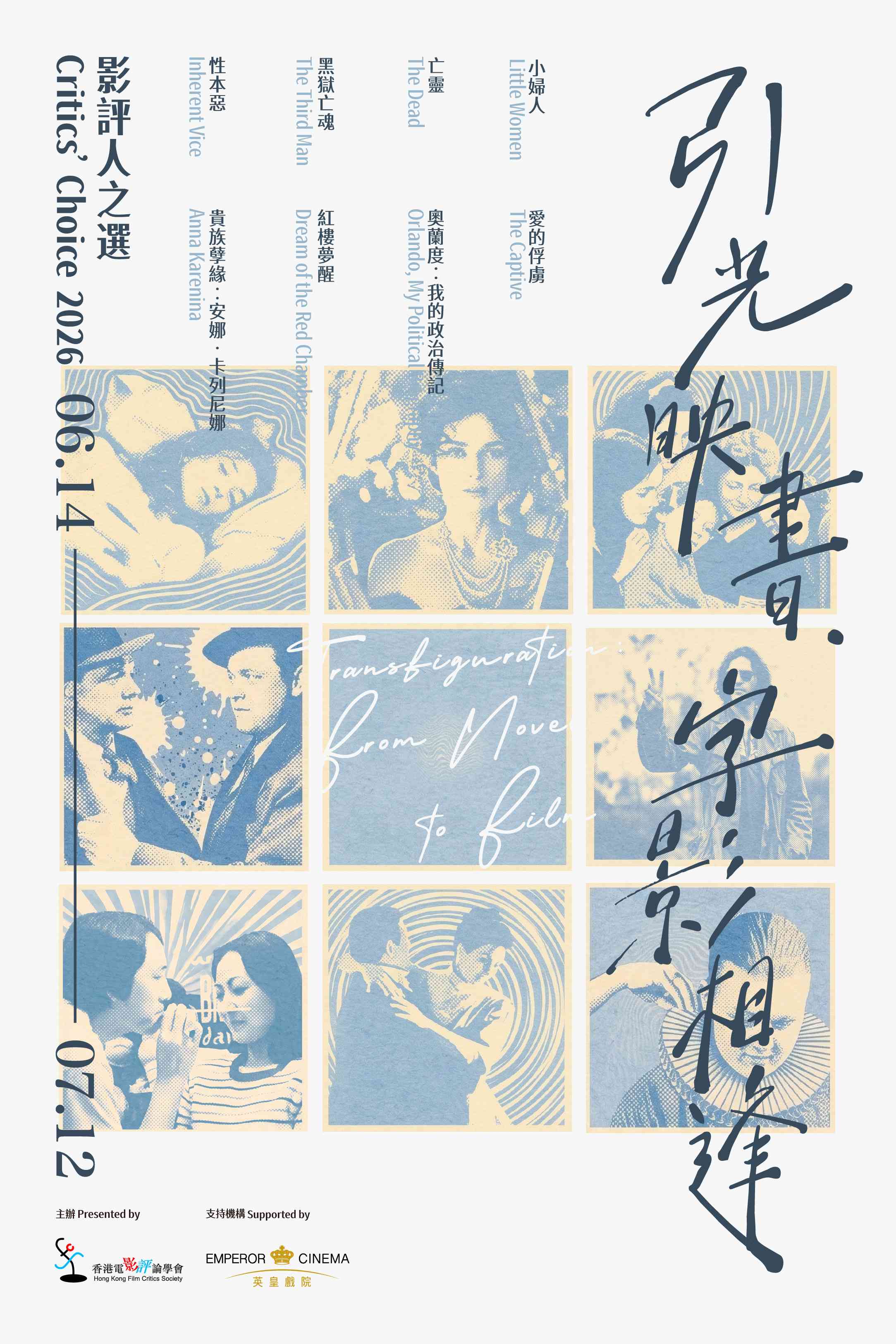
Sai Wan Ho Hong Kong Film Archive | Critics' Choice 2026 - Transfiguration: From Novel to Film
1 Images
1 Images
Description
What new stories are born when the worlds of literature and cinema converge? As an important genre in film, literary adaptation calls for transfiguration in multiple ways: transcending boundaries between mediums and disrupting the conventions of form and content. Faithfulness to the source text is no longer a priority. We are more interested in the creative power of transgression and subversion instead.
Critics’ Choice 2026 focuses precisely on these moments of metamorphosis. The selected films are all linked together in the way that they demonstrate an evolution of female representation in film. Selected by Kenny Ng, The Third Man (1949) portrays post-World War II Vienna where justice and freedom no longer prevail. When Anna Schmidt, the female lead, attempts to assist Holly Martins in investigating the death of Harry Lime the criminal, she plays a heavy role in revealing the complex power relations lying beneath the surface. On the other hand, Timmy Chen’s neo-noir selection Inherent Vice (2014) places a focus on the detective’s ex-girlfriend as an unreliable narrator who happens to be the crucial character in solving crime. Both films refuse to follow the dangerous and mysterious archetype of the femme fatale traditionally seen in detective fiction and film noir.
Lawrence Lau, whose research interest lies in the work of modernist poet and filmmaker Chiu Kang-chien, chooses to include the restoration of Dream of the Red Chamber (1977) adapted from Cao Xueqin’s novel of the same title. The film was produced in Singapore while the director used to split his time between Hong Kong and Taiwan. The vulnerable character of Lin Daiyu is rewritten in the narrative as a tough and courageous woman of the new generation. Horace Chan’s choice is Australian filmmaker Gillian Armstrong’s Little Women (1994), a reiteration of the three sisters’ immaculate relationship and struggles, offering new perspectives on the female coming-of-age narrative. Gabriel Tsang selects Anna Karenina (2012), a story told from the perspective of a female protagonist who reflects on how rigid and superficial the elite, patriarchal British society is. William Lau nominates The Dead (1987), a film revolving around Gretta Conroy’s past and how it inspires her search for a cross-regional identity.
As literary adaptations, the lynchpin that draws all of these films together is their portrayal of female coming-of-age struggles shaped by traditional family values, public ethics, and class disparity. Eventually, they come together as an indirect commentary on issues of their time.These four adaptations reflect the popularity of literary adaptation as a genre at the time they were produced, and how this has opened up creative space for filmmakers in the industry ever since.
Moving beyond representing women solely in a cisgender manner, Paul B. Preciado plays around with the boundaries and versatility of adaptations. His rendition of
Virgina Woolf’s self-reflexive novel Orlando: A Biography is a cross-generational and cross-genre piece moving between fiction and reality, as well as an exploration of how the transgender community is like in the modern day.
A special mention goes to Chantal Akerman—Belgian-Jewish filmmaker and master of slow cinema— as we commemorate the 10th anniversary of her passing. Through a female perspective and delicately poetic cinematography, Akerman’s The Captive (2000) comes into conversation with Marcel Proust’s The Captive , the fifth volume of In Search of Lost Time , reclaiming female autonomy and desire from male gaze and toxic romance.
Date and Location
(Sun) - (Sun)
14 Jun, 2026 Sun 2:15pm, 6:30pm;
20 Jun, 2026 Sat 2:15pm, 7:15pm;
21 Jun, 2026 Sun 2:15pm, 6:30pm;
27 June 2026 Sat 2:15pm, 7:05pm;
28 June 2026 Sun 2:15pm, 7:15pm
20 Jun, 2026 Sat 2:15pm, 7:15pm;
21 Jun, 2026 Sun 2:15pm, 6:30pm;
27 June 2026 Sat 2:15pm, 7:05pm;
28 June 2026 Sun 2:15pm, 7:15pm
Sai Wan Ho Film Archive, Cinema
MTR Sai Wan Ho Station Exit A
Fees
$75
Sai Wan Ho Events

Highlights











Exhibition Hotpick




Drama and Film Featured


Mall Events



Concert





最新
人氣
etnet TV
財經新聞
評論
專題透視
生活
DIVA
健康好人生
香港好去處